openelab.de
 openelab.com




Livox MID‑360S 360‑Degree 3D LiDAR Sensor with ROS2 Support for Robotics and SLAM
Need a larger quantity?
Need bulk pricing?
Get a formal quotation with lead time and volume pricing.
For universities, companies, distributors, and project orders.
Livox MID‑360S 360‑Degree 3D LiDAR Sensor with ROS2 Support for Robotics and SLAM
Livox MID-360S is a compact 3D LiDAR sensor for robotics, SLAM navigation, and obstacle perception. Its rotating-mirror hybrid solid-state design covers 360° horizontally and 59° vertically, capturing the surrounding environment in three dimensions rather than a single scanning plane.
With 200,000 points per second, a built-in ICM40609 IMU, and 100 BASE-TX Ethernet, the sensor provides point-cloud and motion data for host-based mapping, localization, and perception software. The 65 × 65 × 60 mm body weighs 265 g, making it practical for space-constrained mobile platforms.
MID-360S is designed for AMRs, service robots, autonomous forklifts, and outdoor mobile robots. Its typical detection range is 40 m at 10% reflectivity under 100 klx, with a 100 m cut-off range. The sensor supplies measurements to the robot; navigation decisions, object classification, and collision-avoidance behavior depend on the integrated software and system design.
Features
- 360-degree spatial coverage - A 360° horizontal and -7° to 52° vertical field of view supports surrounding-environment perception on mobile robots.
- Hybrid solid-state architecture - Livox's rotating-mirror scanning design collects three-dimensional environmental features in a compact module.
- Dense point-cloud output - 200,000 points/s, first return, and a typical 10 Hz frame rate provide data for mapping, localization, and obstacle-detection pipelines.
- Integrated inertial measurements - The built-in ICM40609 IMU supplies acceleration and angular-velocity data for motion-aware processing on the host.
- Compact mechanical footprint - A 265 g module and 65 × 65 × 60 mm housing suit service robots, warehouse platforms, and custom robotic chassis.
- Near-field sensing - A 0.1 m close-proximity blind zone helps capture nearby surroundings. Measurements between 0.1 m and 0.2 m are reference data, not guaranteed-precision measurements.
- Ethernet integration - 100 BASE-TX Ethernet connects the LiDAR to a host computer through the appropriate power and data cable.
- Time synchronization - IEEE 1588-2008 PTPv2 and GPS synchronization support time-aligned sensor acquisition when the corresponding external timing source is configured.
- Environmental protection - An IP67 enclosure and -20°C to 55°C operating range support indoor and outdoor integration within the documented conditions.
- Active anti-interference - Livox provides an anti-interference function. Sensor placement still matters: avoid aiming another LiDAR directly into the optical window.
- Power-aware integration - A 9-27 V DC supply powers the sensor at 6.5 W under the stated condition; cold-weather self-heating can require 14 W peak.
- Official development tools - Livox Viewer 2, Livox SDK 2, and Livox ROS Driver 2 support commissioning and development workflows described in the MID-360S manual.
Product Comparison
| Parameter | MID-360 | MID-360S |
|---|---|---|
| Laser Wavelength | 905 nm | 905 nm |
| Laser Safety | Class 1, IEC 60825-1:2014 | Class 1, IEC 60825-1:2014 |
| Detection Range (@ 100 klx) | 40 m at 10% reflectivity; 70 m at 80% reflectivity | 40 m at 10% reflectivity, typical; 100 m cut-off range |
| Close Proximity Blind Zone | 0.1 m | 0.1 m |
| FOV | 360° horizontal; -7° to 52° vertical | 360° horizontal; -7° to 52° vertical |
| Range Precision (1 sigma) | ≤2 cm at 10 m; ≤3 cm at 0.2 m | ≤2 cm at 10 m; ≤4 cm at 0.2 m |
| Angular Precision (1 sigma) | <0.15° | <0.15° |
| Point Rate | 200,000 points/s, first return | 200,000 points/s, first return |
| Frame Rate | 10 Hz (typical value) | 10 Hz (typical value) |
| Data Port | 100 BASE-TX Ethernet | 100 BASE-TX Ethernet |
| Data Synchronization | IEEE 1588-2008 (PTPv2); GPS | IEEE 1588-2008 (PTPv2); GPS |
| Anti-Interference Function | Available | Available |
| False Alarm Rate (@100 klx) | <0.01% | <0.01% |
| IMU | ICM40609 | ICM40609 |
| Operating Temperature | -20°C to 55°C | -20°C to 55°C |
| Storage Temperature | -40°C to 70°C | -40°C to 70°C |
| IP Rating | IP67 | IP67 |
| Power | 6.5 W average | 6.5 W at 25°C |
| Power Supply Voltage Range | 9-27 V DC | 9-27 V DC |
| Dimensions | 65 × 65 × 60 mm | 65 × 65 × 60 mm |
| Weight | Approx. 265 g | Approx. 265 g |
The two models share several headline specifications, but their published near-range precision and range definitions differ. A 100 m cut-off must not be compared directly with a 70 m detection distance at a specified reflectivity. Use each model's own firmware and mechanical drawings when updating an existing design.
Specifications
| Parameter | Value |
|---|---|
| Model | Livox MID-360S |
| Scanning architecture | Rotating-mirror hybrid solid-state LiDAR |
| Laser wavelength | 905 nm |
| Laser safety | Class 1, IEC 60825-1:2014 |
| Detection range at 100 klx | 40 m at 10% reflectivity, typical; 100 m cut-off range |
| Close-proximity blind zone | 0.1 m |
| Horizontal field of view | 360° |
| Vertical field of view | -7° to 52°, typical; 59° total |
| Range precision, 1 sigma | ≤2 cm at 10 m; ≤4 cm at 0.2 m |
| Angular precision, 1 sigma | <0.15° |
| Point rate | 200,000 points/s, first return |
| Frame rate | 10 Hz, typical |
| Data interface | 100 BASE-TX Ethernet |
| Time synchronization | IEEE 1588-2008 (PTPv2); GPS |
| Integrated IMU | ICM40609 |
| Anti-interference function | Available |
| False alarm rate | <0.01% at 100 klx and 25°C |
| Input voltage | 9-27 V DC |
| Power consumption | 6.5 W at 25°C ambient temperature |
| Self-heating peak power | Up to 14 W at ambient temperatures from -20°C to 0°C |
| Operating temperature | -20°C to 55°C |
| Storage temperature | -40°C to 70°C |
| Ingress protection | IP67 |
| Dimensions | 65 × 65 × 60 mm |
| Weight | 265 g |
| Connector | M12 A-code, 12-pin, fully shielded male connector |
Measurement conditions: The range-precision values are specified at 25°C with an 80% reflective target at the stated distances. The 100 m cut-off is not a guaranteed detection distance. Effective range varies across the vertical field of view and is shorter toward its upper edge. Targets from 0.1 m to 0.2 m produce reference-only data; low-reflectivity or very small targets within 0.1 m to 1 m require particular care.
Mechanical Integration
The 65 × 65 × 60 mm external envelope is shared with MID-360, but matching outer dimensions alone does not establish complete mounting or cable compatibility. Check the MID-360S 3D model, connector location, mounting holes, and FOV model against the available chassis clearance.

- Lightweight installation - Use a rigid mounting position that keeps the optical window unobstructed. The compact body supports integration into low-profile AMRs and service-robot housings.
- Heat dissipation - Mount the sensor on a thermally conductive metal surface and leave at least 10 mm of surrounding space for airflow, as specified in the product information. Apply additional cooling where needed to keep the housing at or below 80°C.
- Cable routing - Allow sufficient connector access and strain relief. The manual specifies a cable bend radius of at least 60 mm and secure fastening against vibration.
- Power connection - Supply 9-27 V DC with adequate capacity for self-heating. Do not connect a PoE device to the splitter cable's RJ-45 port; use the separate DC power connection.
- Multi-sensor placement - Plan clear fields of view and avoid directly opposing LiDAR beams. Livox warns that direct beam overlap can cause irreversible sensor damage despite the anti-interference function.
Software and SLAM Integration
Livox Viewer 2 is the starting point for viewing and recording real-time point clouds, replaying recordings, and checking the sensor. Livox SDK 2 provides device configuration, status access, point-cloud acquisition, and firmware-update interfaces. The MID-360S manual also directs developers to Livox ROS Driver 2 for ROS-based integration.
- Commissioning workflow - Connect the correct power and Ethernet cable, place the host and sensor on the same network, and verify point-cloud output in Viewer 2 before integrating the robotics stack.
- Mapping and localization - Feed timestamped point clouds and IMU measurements into a compatible host-side SLAM pipeline. Calibrate sensor-to-robot coordinates and validate motion compensation on the actual platform.
- Firmware management - Use the MID-360S-specific firmware file and review its release notes. V35.1.0112 adds IMU range configuration; configure it using the relevant communication-protocol documentation.
- Development boundaries - The sensor does not perform complete navigation, semantic classification, or autonomous driving by itself. Those functions require host processing, suitable algorithms, and system-level validation.
Application
- Autonomous mobile robots - Use surrounding 3D measurements to build warehouse and factory maps, localize within them, and supply obstacle information to a navigation stack. Mounting height and chassis occlusion determine which surfaces remain visible.
- Service and delivery robots - Capture walls, furniture, and nearby objects in a three-dimensional scene for indoor routing and localization. Validate low, thin, dark, or reflective obstacles instead of relying on the nominal minimum range alone.
- Autonomous forklifts and industrial vehicles - Integrate LiDAR measurements into aisle perception, vehicle positioning, and obstacle-awareness systems. Sensor output is one input to the complete safety and motion-control architecture, not a stand-alone collision-prevention guarantee.
- Outdoor mobile robots - Collect environmental point clouds for campus delivery, inspection, and outdoor navigation development. Account for fog, rain, dust, vibration, temperature, and surface reflectivity when assessing usable range.
- Facility mapping and digital twins - Combine point-cloud acquisition with host-side mapping and registration to document indoor structures and operating areas. Survey accuracy depends on the complete acquisition and processing workflow.
- Autonomous-vehicle research - Evaluate omnidirectional perception layouts using calibrated mounting positions and synchronized acquisition. Vehicle planning, object classification, and operational safety remain functions of the wider system.
360-Degree Environmental Perception
A 360° × 59° field of view provides vertical structure as well as surrounding distance measurements. Plan the field of view around the robot body and payload so that integration does not block the intended sensing region.
Indoor Mapping and Small-Object Perception
Compared with a single scanning plane, 3D point clouds expose features at different heights for mapping and localization. Livox's non-repetitive scanning pattern increases spatial coverage as points accumulate over time. Longer integration collects more scene detail, while a moving platform needs appropriate timing and motion compensation.

Outdoor Perception in Changing Light
Active laser ranging supports operation in bright and low-light environments without depending on visible scene texture. Point clouds can feed obstacle-detection and classification algorithms on the host, but the resulting performance still depends on the target, weather, processing, and sensor placement. For MID-360S, use 40 m at 10% reflectivity under 100 klx as the typical specified range condition.

Packing List
| SKU | Description | Quantity |
|---|---|---|
Livox-MID-360S
|
Livox MID-360S LiDAR sensor | 1 |
| Optical Window Cleaning Cloth | 1 | |
| L-Shaped Hex Screwdriver | 1 | |
| M3 Screws Package | 1 | |
Livox-MID-360S-Kit
|
Livox MID-360S LiDAR sensor | 1 |
| Optical Window Cleaning Cloth | 1 | |
| L-Shaped Hex Screwdriver | 1 | |
| M3 Screws Package | 1 | |
| One-to-three cable, 1.5 m | 1 | |
| Power Adapter | 1 |
Reference Documents
Documents and Manuals
3D Models
Software and Firmware
- Livox Viewer 2 for Windows
- Livox Viewer 2 for Linux
- MID-360S Firmware V35.1.0112
- MID-360S Firmware Release Notes (PDF)
- MID-360S Download Center
Developer Resources
Recommended Articles
FAQ
What is the difference between MID-360S and MID-360S-Kit?
Both options contain the MID-360S LiDAR sensor, cleaning cloth, L-shaped hex screwdriver, and one M3 screw package. Livox-MID-360S-Kit additionally includes a 1.5 m one-to-three cable and one power adapter. The standard MID-360S package does not include those two additions.
How does MID-360S compare with MID-360?
Both have a 360° × 59° field of view, 200,000 points/s, and the same nominal body size and weight. MID-360S specifies ≤4 cm range precision at 0.2 m, versus ≤3 cm for MID-360. MID-360S lists a 100 m cut-off, while MID-360 lists 70 m at 80% reflectivity; those are different range definitions, not a direct performance comparison.
What field of view and detection range does MID-360S provide?
The field of view is 360° horizontally and -7° to 52° vertically, typical. Livox specifies 40 m at 10% reflectivity under 100 klx and a 100 m cut-off range. Effective range varies within the vertical field of view and with target and environmental conditions.
Can it measure objects accurately at 10 cm?
The close-proximity blind zone is 0.1 m, but Livox treats measurements from 0.1 m to 0.2 m as reference data because precision is not guaranteed. Low-reflectivity, thin, or small targets at close range also need application-specific testing.
Can MID-360S be used with ROS, ROS 2, and SLAM?
The MID-360S manual points developers to Livox SDK 2 and Livox ROS Driver 2. The driver supports ROS and ROS 2 workflows; follow its documented build and configuration requirements. A compatible SLAM package runs on the host and uses correctly timed and calibrated sensor data.
What are the point rate and IMU specifications?
The LiDAR provides 200,000 points/s in first-return output with a typical 10 Hz frame rate. The integrated ICM40609 IMU supplies three-axis acceleration and three-axis angular velocity for host-side processing.
Which Ethernet and synchronization interfaces are available?
MID-360S uses 100 BASE-TX Ethernet and supports IEEE 1588-2008 PTPv2 and GPS time synchronization. GPS synchronization requires an external timing source; it does not mean the sensor contains a GPS positioning receiver. Do not connect a PoE device to the splitter cable's RJ-45 port.
What power supply and thermal design are required?
Use 9-27 V DC. Power consumption is 6.5 W at 25°C, and self-heating between -20°C and 0°C can reach 14 W peak. Follow the installation guidance for conductive mounting, airflow, and housing-temperature control.
Is MID-360S suitable for outdoor or multi-robot operation?
The sensor has an IP67 rating and an active anti-interference function. Fog, rain, dust, temperature, vibration, and target material can still affect performance. Avoid directly opposing LiDAR beams and verify the complete robot's sensing and safety behavior in its operating environment.
Which official files are available for setup and development?
The Reference Documents section includes the MID-360S English manual, product information, sensor and FOV CAD models, splitter-cable CAD, Windows and Linux Viewer 2 software, firmware and release notes, SDK, ROS driver, Wiki, and technical support links.
1. General Shipping Information
- We provide reliable shipping services with a tracking number for each order.
- Shipping addresses must be entered in English and should not contain special symbols, so that the courier system can recognize your location correctly.
- Please make sure your shipping address is accurate before placing your order. We ship strictly according to the address provided at checkout.
- In-stock orders are usually dispatched within 1 business day after order confirmation.
- Estimated delivery times refer to the period after dispatch and do not include order processing time, weekends, public holidays, customs inspection, or force majeure delays.
- If you need to cancel or modify your order, please contact us before the order is marked as “Shipped”. Once shipped, the order cannot be canceled or changed.
🚀 Need Faster Shipping?
If you require expedited shipping, please contact our customer support team at info@upenelab.com for a customized quote based on your destination.
2. Shipping Rates & Options
Shipping rates are calculated based on order value, destination, and available shipping methods. The final available options will be displayed at checkout.
2.1 Germany Domestic Shipping
| Shipping Method | Order Value | Cost | Est. Delivery |
|---|---|---|---|
| Deutsche Post | €0.00 - €50.00 | €4.95 | 2-4 Business Days |
| Deutsche Post | Over €50.00 | Free | 2-4 Business Days |
|
DHL Paket (Faster Delivery) |
€0.00 - €50.00 | €6.95 | 1-3 Business Days |
|
DHL Paket (Faster Delivery) |
€50.00 - €100.00 | €2.00 | 1-3 Business Days |
|
DHL Paket (Faster Delivery) |
Over €100.00 | Free | 1-3 Business Days |
2.2 Selected EU Countries / Regions
Available EU shipping destinations are shown at checkout based on your shipping address. For orders shipped to selected EU countries or regions outside Germany, we use FedEx Regional Economy.
| Shipping Method | Order Value | Cost | Est. Delivery |
|---|---|---|---|
| FedEx Regional Economy | €0.00 - €100.00 | €7.95 | 3-5 Business Days |
| FedEx Regional Economy | Over €100.00 | Free | 3-5 Business Days |
EU orders may be fulfilled from our Munich warehouse or, when applicable, from our Shenzhen warehouse depending on inventory availability. For EU member states, OpenELAB covers applicable import duties and taxes under DDP service where required.
2.3 United States
| Region | Shipping Method | Order Value | Cost | Est. Delivery |
|---|---|---|---|---|
|
Continental U.S. (50 States) |
USPS Ground Advantage | €0.00 - €45.00 | €4.95 | 3-7 Business Days |
| USPS Ground Advantage | Over €45.00 | Free | 3-7 Business Days | |
| USPS Priority Mail | €0.00 - €45.00 | €16.95 | 1-4 Business Days | |
| USPS Priority Mail | Over €45.00 | €14.95 | 1-4 Business Days | |
|
Non-Continental U.S. (AK, HI, PR, etc.) |
USPS Ground Advantage | €0.00 - €60.00 | €6.95 | 5-9 Business Days |
| USPS Ground Advantage | Over €60.00 | Free | 5-9 Business Days |
Non-Continental U.S. regions include Alaska, American Samoa, Guam, Hawaii, the Marshall Islands, the Northern Mariana Islands, Palau, Puerto Rico, the U.S. Virgin Islands, and U.S. Armed Forces addresses.
2.4 International Destinations Outside the EU
For selected international destinations outside the EU, including Switzerland, the United Kingdom, and Norway, shipping rates are as follows:
| Order Amount | Shipping Cost |
|---|---|
| €0.00 - €300.00 | €19.95 |
| Over €300.00 | Free |
For non-EU destinations, import duties, taxes, and customs fees may be charged by the destination country and are the responsibility of the recipient.
3. Warehouses & Fulfillment
Our products may be stored in our Munich, Arlington, and Shenzhen warehouses. The actual shipping warehouse depends on product availability and destination.
3.1 Munich Warehouse
For products stored in our Munich warehouse, we use Deutsche Post or DHL Paket for domestic deliveries within Germany. For selected EU destinations outside Germany, we use FedEx Regional Economy.
3.2 Arlington Warehouse
For products stored in our Arlington warehouse, we use USPS or UPS for deliveries within the United States.
3.3 Shenzhen Warehouse
For pre-order items or products fulfilled directly from our Shenzhen warehouse, we arrange reliable international shipping based on destination and inventory status. For EU member states, OpenELAB covers applicable import duties and taxes under DDP service where required.
4. Inventory, Pre-orders & Split Shipments
- Inventory Status: Please check the product page for real-time stock information. If an item is out of stock in our local warehouses, it may be marked as “Pre-order”.
- Pre-order Fulfillment: Pre-order items may be shipped directly from Shenzhen or restocked to a local warehouse first before final delivery.
- Split Shipments: If your order contains both in-stock and pre-order items, we may ship them separately. No additional shipping fee will be charged for split shipments caused by our fulfillment arrangement.
5. Customs, Taxes & Delivery Issues
5.1 Customs and Taxes
For EU Member States:
Whether shipped from Germany or China, OpenELAB covers applicable import duties and taxes under DDP service where required. Customers in EU member states should not be charged additional import duties or VAT upon delivery.
For destinations outside the European Union, such as Switzerland, Norway, and the United Kingdom, import duties, taxes, and customs fees may be charged by local authorities upon delivery. These fees are the responsibility of the recipient.
5.2 Damaged, Delayed, or Lost Parcels
Please inspect your parcel upon delivery where possible. If you notice visible damage, please report it to the courier and contact us as soon as possible. This does not affect your statutory consumer rights.
If your parcel is delayed, lost, returned to sender, or the tracking information has not updated for an unusual period of time, please contact us at info@upenelab.com. We will assist you in checking the shipment status with the courier.
5.3 Incorrect Address or Failed Delivery
If a parcel cannot be delivered due to an incorrect or incomplete address provided by the customer, refusal of delivery, or failure to collect the parcel, additional shipping or return costs may apply.
6. VAT
For orders within the EU, VAT is collected at checkout according to the applicable destination rules. No additional VAT should be collected upon delivery for EU member state orders covered under our DDP shipping arrangement.
Customer Reviews
Perfect communication, excellent delivery, and clear updates on the order status. Thank you! Highly recommended, 5 stars!
The short 0.1 m blind zone is a nice feature. It should help robots detect nearby obstacles better, especially in narrow indoor spaces or around shelves.
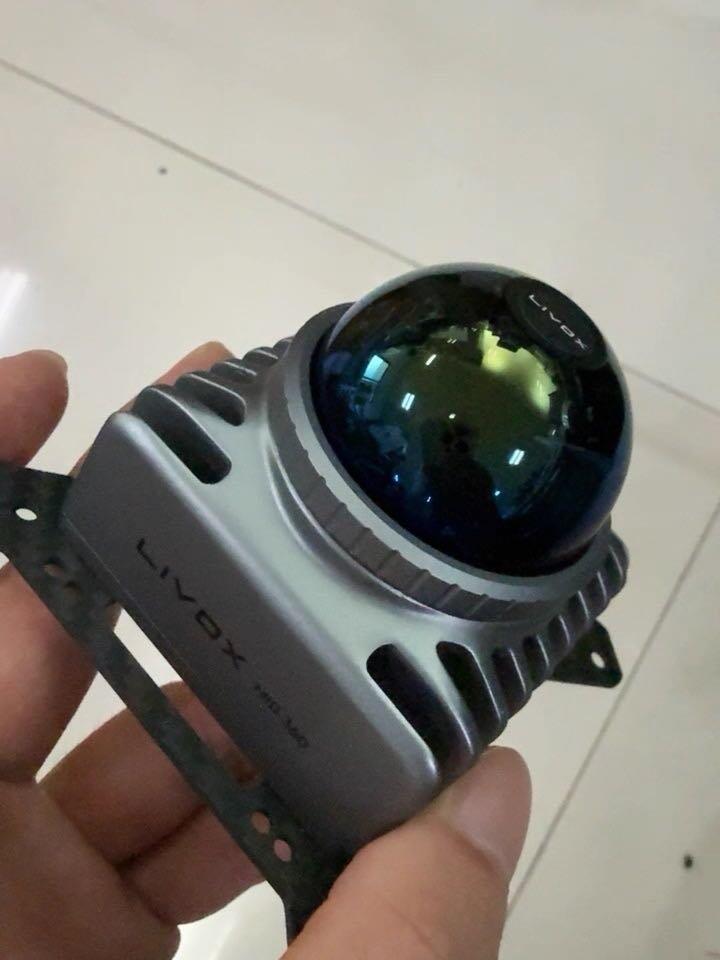
Nicht billig, aber die Ausstattung passt zum Preis. Wenn man nur ein kleines DIY-Projekt macht, ist es vielleicht zu viel. Für SLAM, autonome Navigation und 3D-Wahrnehmung ist es aber eine starke Option.
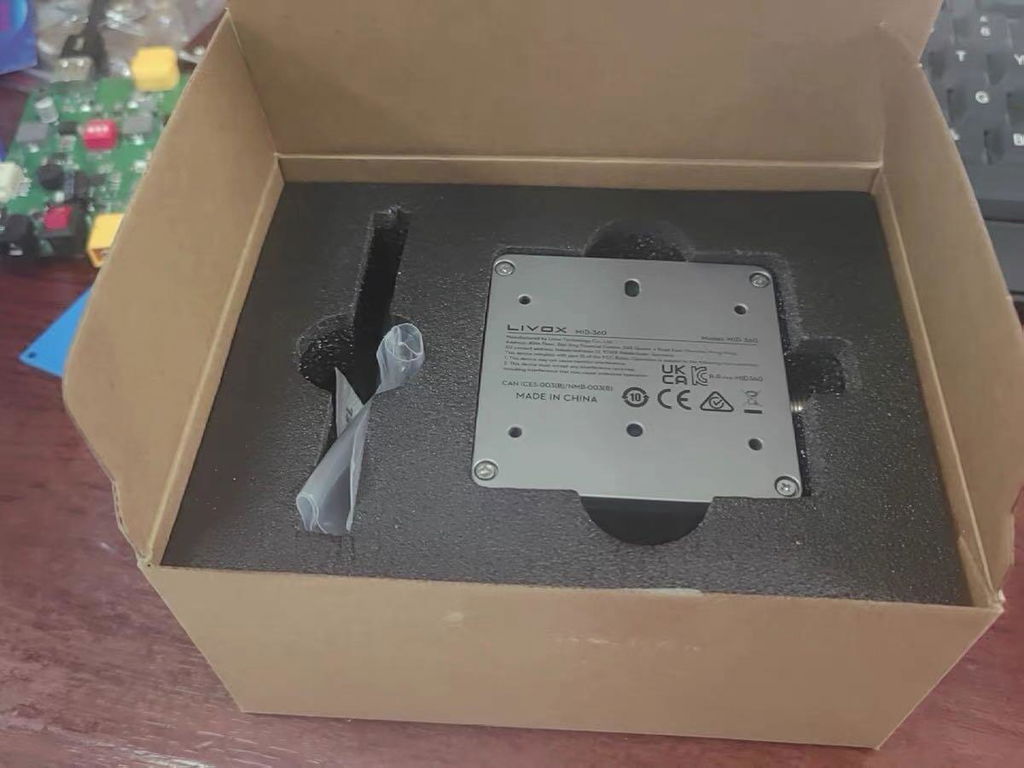
The Livox MID-360S arrived sooner than expected, and the package was well protected. I checked the item after opening the box and everything looks fine so far. The sensor is smaller than I expected, which is very helpful for projects with limited installation space. I have just started testing it, and the first impression is good. I will continue testing and update more feedback after using it for a while.
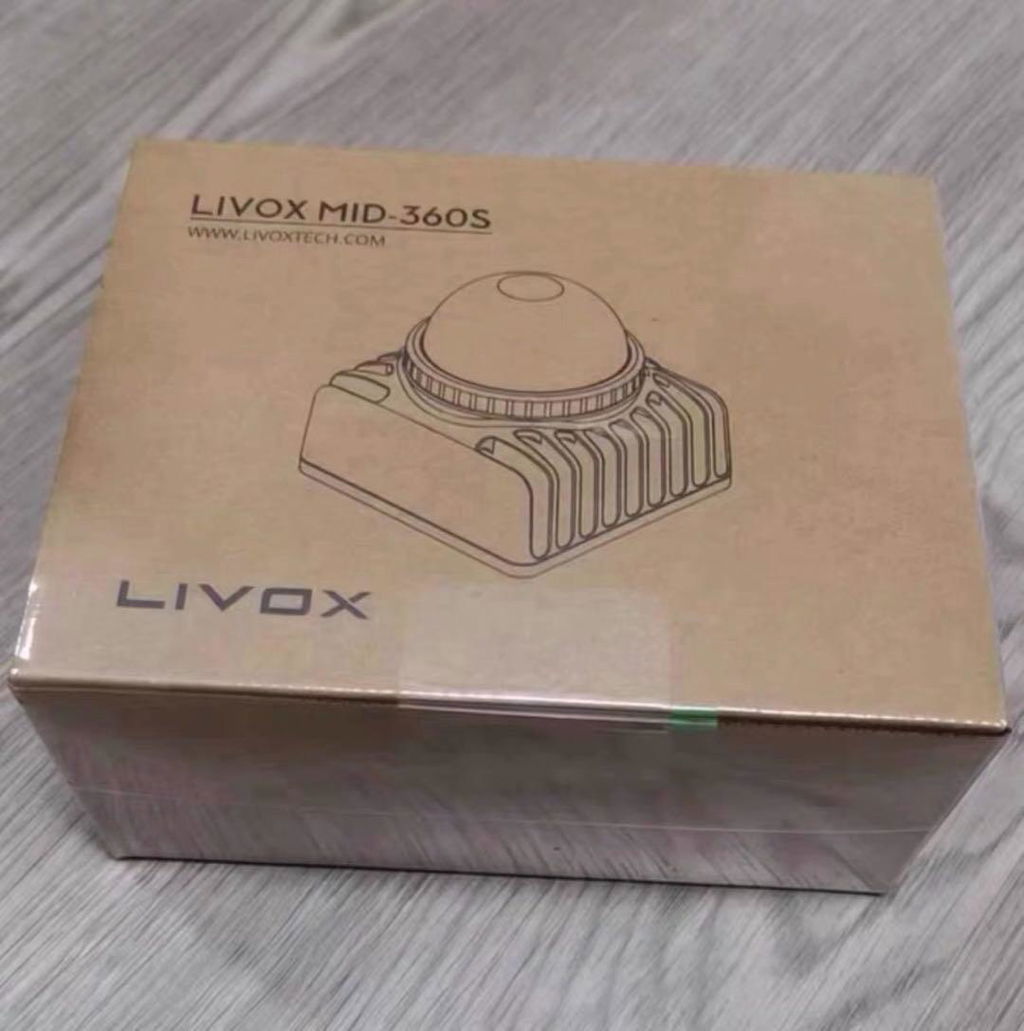
The item arrived quickly and the package was in good condition. After opening the box, everything looked fine and there were no obvious issues. I have just started testing the Livox MID-360S, so I will update my feedback after more use. First impression is good. The size is very compact, which makes it a good choice for users who need a small LiDAR sensor for limited-space projects.